How It All Began
In the past week, we have been dedicating ourselves to a new mission — to build a custom-made, one-of-a-kind, built-to-our-specs BYOK AI platform. And for anyone reading this that is unfamiliar with what BYOK means, it represents “Bring Your Own Key”.
We will not go into detail about what it is, but if you are really interested to find out more, here’s an article you could read: https://surfmind.ai/blog/byok-bring-your-own-key-future-of-ai-tools
We first experienced this inspiration right after making an investment into an aggregated AI platform called “Ask AI”. That very first day of attempting to make a transition to that platform led to a sense of frustration. Honestly, we had felt this feeling before, but this time, it’s just more clear. And so, after several rounds of frustration, we decided to “rage quit” the platform.
From there, we began to explore a couple of other BYOK options. But after looking around for a while, we were once again left feeling frustrated. None of those platforms — not a single one felt like the right solution for what we needed.
At this point, I can honestly tell you, mentally, we were feeling rather confused. Not because we are feeling confused about our own needs, but confused by the fact that none of these platforms had what we truly needed. It’s almost as if they had gone 80% of the way, or 90% of the way, and then they just stopped trying and gave up.
It was in that very moment that we finally had own very own reckoning. We knew that it was finally time for us to stop relying upon other companies to give us something that we truly needed.
Over the past decade, we have been working with the different tools and platforms that have been made available by other companies. Most of the time, we found what they have created lacking. Like, 60% of the time. And then there is the 20% that were considered “Premium” tools. They were truly amazing. And for the past two decades, some of them have continued to serve us really well. They continue to do so even now. Finally, there is the other 20% where they may be great and have their own merits for being great, and yet, they were never quite the right tools for us. Certainly not when it comes to our work as a master craftsman.
That is the precise moment when we finally said to ourselves, “You know what? We’re done waiting for others to creating something that we truly need. It’s time for us to do it for ourselves.”
2010s: When MVPs and Prototypes Still Meant Something
Let’s go back to the early-2010s shall we? We remembered a time in the early-2010s when we began to play around the the concept and idea of wanting to build a proof-of-concept. Back then, MVPs and prototypes were not really a thing yet. 99% of the industry was still relying on the old Waterfall cycle when it comes to design & development. Agile might have been around since the 1970s, but it really didn’t gain any real-world recognition until after the mid-2010s.
It was at this time in our career as an independent consultant that we began proposing the idea of creating these quick, fast PoCs. One thing you ought to know about our “MVPs” and “prototypes” back then — they were NOT really MVPs or prototypes either.
They were something more.
For as long as we could remember, we have never really believed in the idea of wasting our time and energy on building something and then eventually throwing it away. The same way we also respected our client’s time and investment in us. The only reason we decided to adopt those terms was because it’s the only compromise we could make that would make the rest of the industry accept how we choose to conduct our business. It was a “fitting in” coping mechanism.
It was…easier to sell.
Yet, for about a decade, those concepts and ways of exploring new design ideas and engineering solutions had some meaning and value. I can still remember how during the early years of using those terminologies inside a client meeting used to carry weight.
But as we fast-forward to May 2026, that weight, that meaning, that value — it’s gone. Like, ABSOLUTELY.
AI IS the Greatest Equalizer
As we come back to our present moment, one thing is becoming increasing clear to us — because AI has made it so easy for anybody to turn an idea 💡into a working prototype or “MVP”, it has also removed any differentiating factor when it comes to the true meaning and value of prototypes. And what makes it even worse is this concept of “fast and cheap”.
This past week, while we were working on our very own “Forge” platform, we began to find ourselves distancing ourselves away from the words “MVP” and “prototype”. Not because we don’t think they have any purpose. But because those terms simply aren’t sufficient to describe the work that we are doing.
In the early 2000s, and even in the 1990s, here in Singapore we had a rather popular local brand called “Bata”. But because they were both cheap and had terribly short product life, we locals often described the brand as, “Buy and Throw Away”.
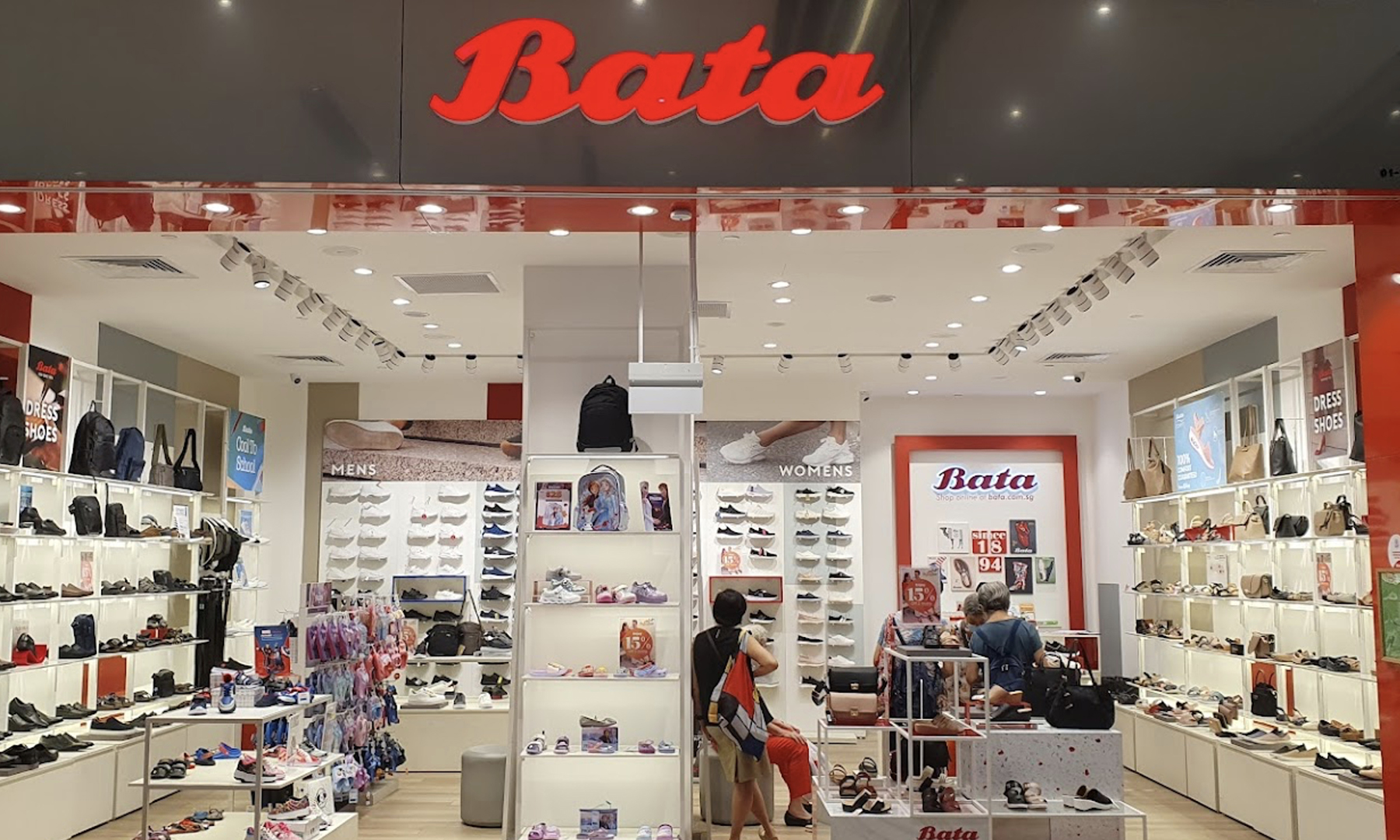
Similar to that joke about Bata back in the 2000s, today’s MVPs and prototypes are starting to create that very same vibe.
We are calling it, “Build and Throw Away”. 😂
And because 10 / 10 people can now easily build a prototype like a quick weekend project, there is honestly not much meaning and value to the concept going forward.
Embracing the Antithesis of “Build and Throw Away”
Through this past week, as we focused on the vision and mission objectives of what we wanted for our own “Forge” platform, we also asked ourselves, “How can we take what we have built now and continue to expand onto it? Extend it? Are we just going to build something quickly, prove that the idea works and then dump it?”
Our answer was “NO.”
We knew that we would kick ourselves for wasting that time and energy to build something only to have to throw it away. Even way back when, when we started to building those early “prototypes”, they were never really quite prototypes in our book.
We still remember how many of the industry insiders and community members were against how we were choosing to design and build stuff. Most that eventually caught on to the idea were taking shortcuts and making compromises. Sure, they ended up “building very fast”, but many of their “prototypes” or “MVPs” required multiple iterations to get right.
They only seemed fast at first. But in the long run though, because we were more focused on being intentional and precise (asking the right questions and developing clarity along the way), we did take longer to get the foundations right. Also, because our foundations were better, the next stage of our designs and builds also progressed way more smoothly than anybody else’s.
There is a reason why we developed our very own doctrine.
Slow. Deliberate. Precise.
— The Inventor’s Doctrine

A Master Craftsman Knows Not to be Wasteful
If you were to speak to any master craftsman today, they will also tell you the same thing — that we should never waste good materials. There is a reason why the statement exists: “Measure twice before making a single cut.”
In an industry today where anybody can rely upon AI tools to generate a UI or front-end code, the real differentiator isn’t about who can produce more or faster, it is really about who can produce something different. Something that even the AI can’t produce.
The only way to truly answer that question is by thinking deeper, further. It is about knowing how to ask the right questions before you decide to design or build something. It’s about clarity of vision.
A master craftsman isn’t slow because they refuse to trust in modern tools. They choose to be slow and deliberate because they know how invaluable a solid foundation is. Get the foundations of anything you want to build right, and you would have the peace of mind, knowing that whatever else you create on top of it will never run the risk of falling apart later.
A Message to Our Fellow Craftsman
At this time of writing this post, I know for a fact that those like us are far and few right now. But that will not be the case for very long. As AI continues to advance, there is also a clear recognition that skills and proficiency are no longer enough. If all 100 candidates applying to the job can do the same thing at the same standard, and share the same level of thinking, then what is the real value for hiring any of them?
What the industry is going to need (and soon), is to start looking at hiring those who can offer something more. That something has been described by many design and engineering leaders using different words, but they all meant the same thing — craftsmanship.
True craftsmanship in the age of AI is going to be the true differentiator of who will actually excel and remain standing once the dust settles. The question you’ve got to ask yourself is, “Am I going to be the one whose still standing once the dust settles? Or am I going to be just like the other 200 options?”
As for those that are feeling like the “Build and Throw Away” practice doesn’t sit right with you, know that you are not alone. There is nothing wrong with you. You’re just like us — a craftsman in your own right.
Leave a Reply