
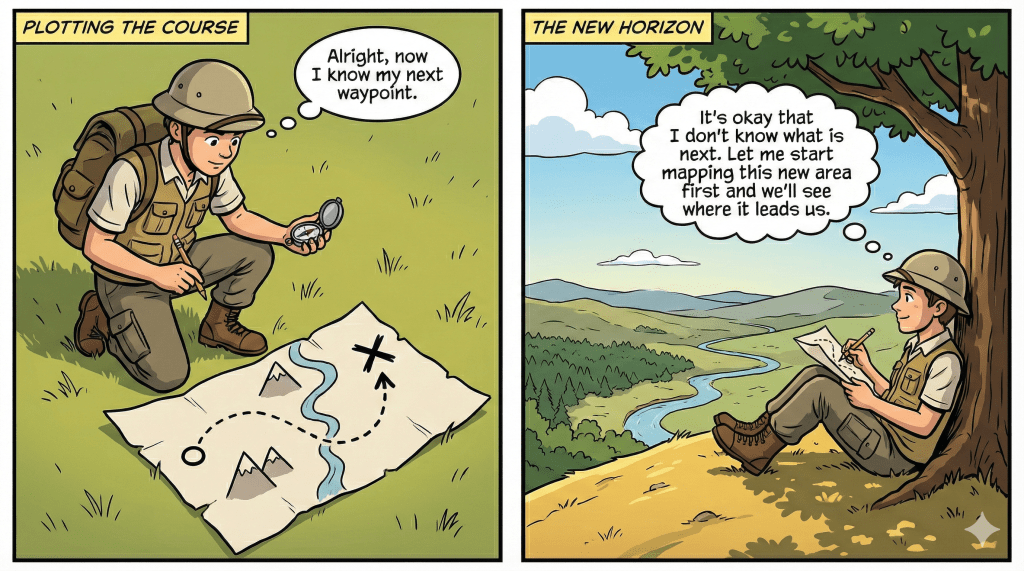
Opening: Our Mission Begins
Our Very First Sign
The first time we trusted our inner compass was in 2006.
We were deep in our bones certain about TWO things: UX was going to matter, and there was a space between design and development that needed a new kind of practitioner. The industry didn’t have names for these things yet. But our compass was pointing clearly in that direction.
So we followed it.
We created the earliest forms of breadcrumb navigation, step indicators, accordions, and form wizards. Work that now generates billions of daily interactions across every digital screen you touch. We then went on to pioneer what would later be called UX/Design Engineering—years before the industry had language for it.
Our instincts were right. The compass never lied.
Our Second Sign
The second time was in 2014.
Our compass told us: quit the corporate role at Avanade. Properly pursue UX. Do the work you were always meant to do.
By then, the industry was catching up. The evidence was emerging. The patterns we’d been seeing for years were finally becoming visible to others. And we recognized something important: when we trusted our inner compass before, it always led us towards something meaningful.
So we took the risk again.
We used our credit cards to invest in what we needed: a top-end MacBook Pro, Progress Telerik’s DevCraft Ultimate suite, and all the essential design & development tools that would let us operate at full capacity. To be clear: We didn’t compromise here. We literally wiped out our credit cards. It would also put us into debt. But it also opened the door to opportunities like the UN Environment Programme project in 2015—work that only comes when you’re fully visible and fully capable. We remember the experience from that period of our life most vividly because every single opportunity that followed weren’t just based upon our capabilities of that time, but also our fullest [untapped] potential.
…every single opportunity that followed weren’t just based upon our capabilities of that time, but also our fullest [untapped] potential.
That decision panned out. Not because we had a map. But because we trusted our compass and recognized the pattern.
Why 180 Days?
Six months. Roughly 26 weeks. 180 days.
Long enough to see patterns emerge. Short enough to maintain focus and intensity.
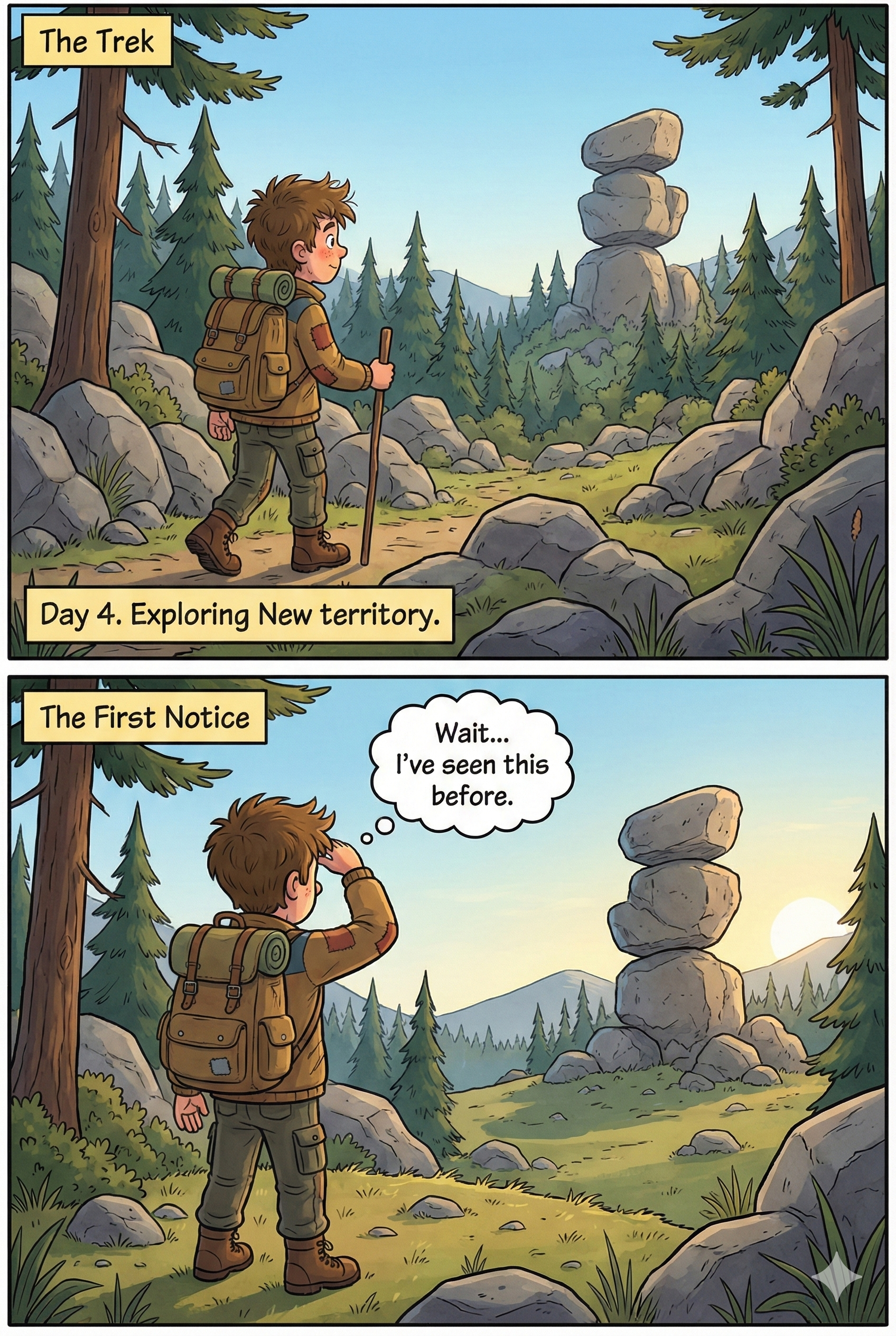
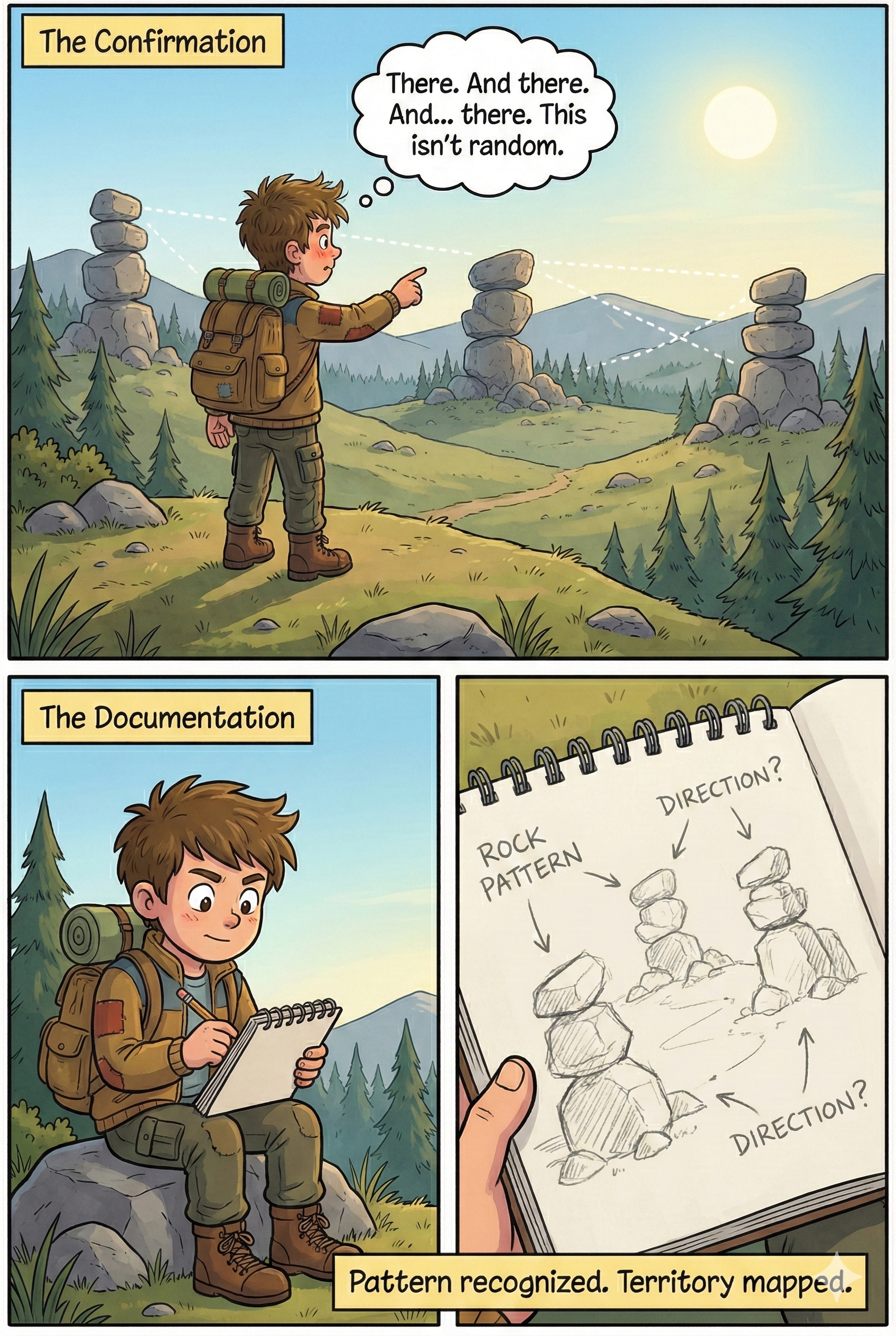
We chose 180 days deliberately. Not because we expect everything to resolve in exactly six months, but because meaningful patterns need time to reveal themselves.
When you’re a pioneer, you can’t judge success by daily metrics. Some compass readings take weeks to validate. Some breakthroughs show up months after you take the first step. Some connections need time to mature before they become opportunities.
180 days gives us enough runway to:
- Test our hypothesis about authenticity attracting aligned opportunities
- Collect evidence across multiple domains (work, benefactors, industry validation)
- Document the journey in real-time without rushing to conclusions
- Adjust our methods while staying true to the compass direction
This isn’t a “get results fast” sprint. It’s a documented expedition.
We’re not promising we’ll have everything figured out by Day 75, Day 113, or Day 180. We’re promising we’ll show up authentically every day, trust our instincts, document what we learn, and let the patterns speak for themselves.
By the end of 180 days, we’ll know:
- Whether the authenticity → attraction pattern holds true at this scale
- What showing up as our fully integrated selves actually generates
- How the compass performs when we trust it completely, without backup plans or compromises
And you’ll get to watch it unfold in real-time.
That’s the experiment.
The Compass vs Map Framework
Most people navigate life with a map 🗺️.
They can see the destination. They know the landmarks. They follow the established routes. There’s comfort in that—knowing exactly where you’re going and how you’ll get there. There’s predictability. Certainty. It feels safe.
As pioneers, we don’t get that luxury.
We navigate with a compass, not a map.
The compass points to a direction—our True North. It tells us where to go, but not the how, or when we’ll get there. We can see the general shape of the territory, maybe some rough outlines, but the details? Those reveal themselves as we move.
In Practice: What it Means to Follow Our Compass 🧭
The Compass represents:
- Who we are at our core (sense of self, values, identity)
- What we’re capable of (skills, vision, patterns we recognize)
- Our three core philosophies (i.e. filters/standards): Purpose, Intentionality, Clarity
The Map represents:
- The world and how we navigate it day-to-day
- Specific tactics, strategies, and methods we try
- The terrain that reveals itself as we explore
The key difference?
People with maps know what’s coming. They can plan five steps ahead. They can tell you exactly where they’ll be in six months.
People with compasses know their direction, but not their exact path. We take one step, observe, document, adjust, and take the next step. The map builds itself as we go—one observation at a time.
That’s not uncertainty. That’s adaptive navigation.
We’re not lost. We know where we’re headed. We just don’t know every turn we’ll need to take to get there.
And honestly? That’s exactly how breakthrough work happens.
Because if we already had the map, someone else would’ve walked this path before us. The fact that we’re navigating with a compass means we’re creating new territory.
That’s what pioneers do.
Professional Vlog Series: EP. 2
Earlier in the week, we also recorded the 2nd episode for our “#lifeofapioneer” professional vlog series where we dived briefing into this subject matter.
What We’re Actually Testing
Here’s what we need to be clear about: we’re not testing whether we can force a specific outcome.
We’re not testing “can we get a benefactor by February?” or “can we land a $50K contract in 60 days?”
Those might happen. They might not. That’s not the experiment.
What we’re actually testing is this:
When we show up as our fully integrated selves—operating with complete authenticity about who we are, what we’re capable of, and what we need—what conditions emerge?
That’s the hypothesis.
It’s based on a pattern we’ve observed throughout our career: every time we’ve attracted meaningful support—angel investors, benefactors, and major breakthrough opportunities—it happened because we were being real about everything. There was no selective versions that we’re trying to present to the world. Just 100% “US”.
Not when we were performing resilience.
Not when we were hiding our struggles.
Not when we were shrinking to fit expectations.
When we showed up unfiltered, the right people found us.
So over the next 180 days, we’re testing whether that pattern holds true when we apply it deliberately, consistently, and publicly.
Specifically, we’re watching for:
- Work opportunities that align with our actual value (not just any work, but the right work)
- Benefactors or angel investors who resonate with our journey and want to support what we’re building
- Industry validation from leaders who recognize our pioneering contributions (more Andrew Martin / Dan Maccarone moments)
- Unexpected breakthroughs that emerge from sustained visibility and authenticity
Our current confidence levels
We’re not operating on blind faith here. We’re operating on probabilistic thinking based on past evidence.
- UX trends/practices: 400%+ confidence (20 years of being proven right)
- UX/Design Engineering pioneering: 50-60% confidence (the market is catching up, but we need more validation)
- Authenticity → Attraction pattern: 40-50% confidence (we’ve seen it work before, but not enough data points to call it reliable yet)
That 40-50% range is exactly why this is an experiment.
We have enough pattern recognition to warrant testing the hypothesis. We don’t have enough certainty to bet everything on it without documentation.
So we’re running the test. Publicly. In real-time.
If the pattern holds? Our confidence jumps to 70-80%, and we’ll have documented proof for ourselves (and others) that this approach works.
If it doesn’t play out as expected? We adjust the method, check the compass, and keep moving in the same direction. Because even if the specific tactic is off, the compass direction has never been wrong.
That’s the beauty of navigating with a compass instead of a map. We’re not married to any one route. We’re simply committed to the overall direction.
The Evidence We’re Collecting
Pioneers don’t just navigate—we document.
Every observation. Every pattern. Every signal that confirms or contradicts our hypothesis. Because without documentation, breakthrough moments disappear into memory, and patterns stay invisible.
Over the next 180 days, we’re collecting evidence across FOUR key areas:
1. Work Opportunities That Align With Our Value
Not just any work. Not “take what we can get” work.
We’re watching for opportunities where:
- The client/company recognizes what we’ve built and wants that level of work
- The scope matches our actual capabilities (UX/Design Engineering, not just “generic frontend dev”)
- The engagement respects our rates and project minimums (S$350/hour, S$10K minimum)
What this would prove: That when we stop shrinking and state our value clearly, the right work finds us.
2. Benefactors or Angel Investors Who Resonate
We’re not chasing funding. We’re watching whether people who understand our journey and see our value choose to support what we’re building.
We’ve already made two direct approaches (Uma Thana Balasingam, and one other). Uma said no—and that’s perfectly fine. But we’re documenting: does the pattern of “show up real → right people find us” hold true?
What this would prove: That authenticity attracts aligned support, not just work opportunities.
3. Industry Validation From Recognized Leaders
We’ve already collected some significant evidence here:
- Andrew Martin (UXPin CEO) publicly endorsed us as an industry pioneer
- Dan Maccarone (UX Collective) featured us as a Global Top Voice in UX
We’re watching for more moments like these—where industry leaders independently validate what we’ve been saying about our contributions for years.
What this would prove: That our pioneering work is being recognized at the highest levels, not just by us.
4. Unexpected Breakthroughs That Emerge From Visibility
Sometimes, the best kind of evidences are the ones that we couldn’t predict.
A connection that turns into a partnership. A LinkedIn post that sparks a conversation that opens a door. A pattern we didn’t see until we documented our way into clarity.
We’re staying open to signals we weren’t specifically looking for.
What this would prove: That sustained visibility and authenticity create conditions for emergence—outcomes we couldn’t have planned for.
The Commitment (Our Three Lines in the Sand)
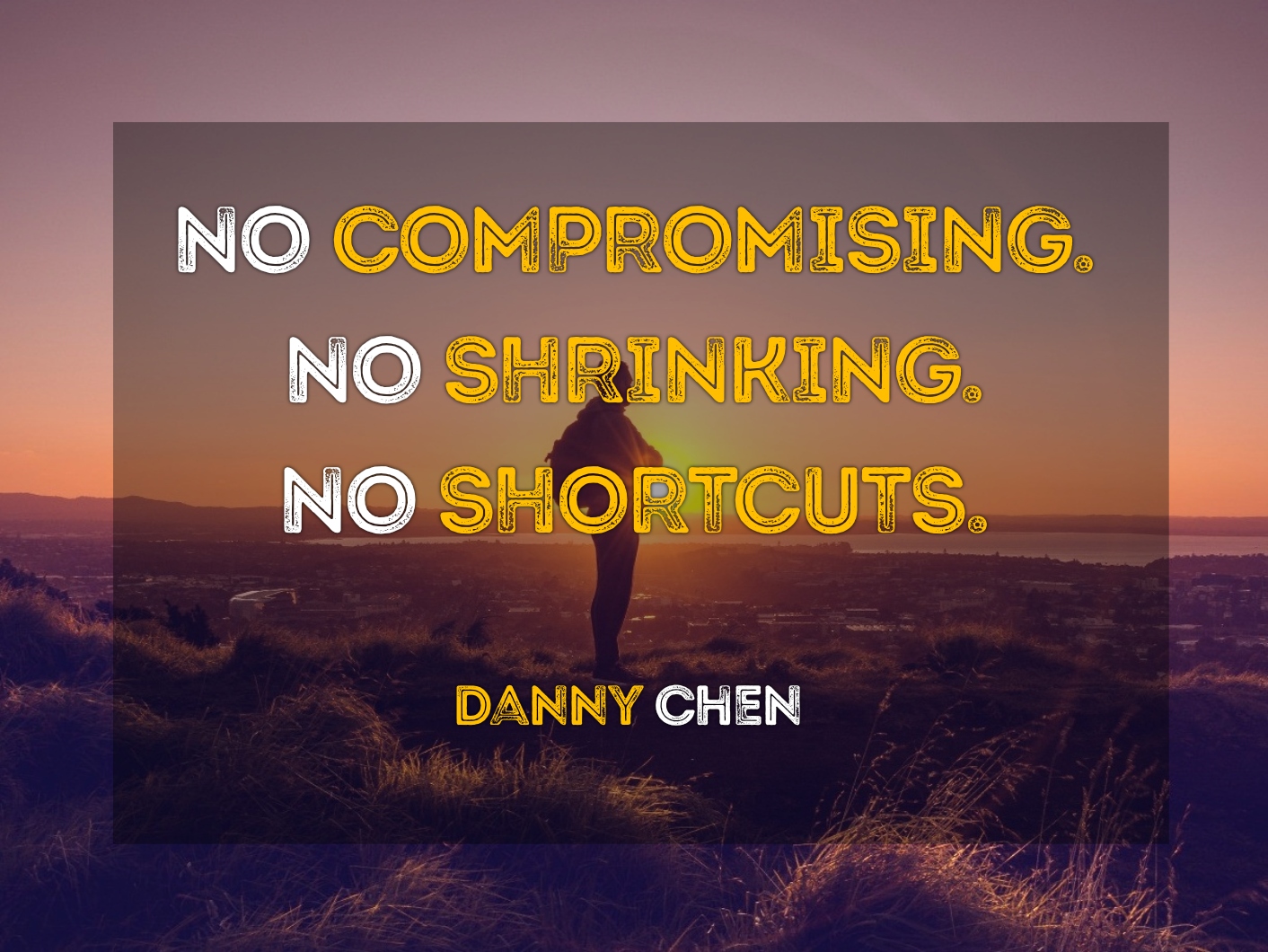
These aren’t just words. These are our operating principles for the next 180 days—and beyond.
We’ve drawn three lines in the sand. Three non-negotiables that define how we’ll navigate this experiment, regardless of what happens.
No Compromising.
We will not accept less than what we know we’re capable of delivering—and we won’t settle for less than what we’ve earned.
What this means in practice:
- We maintain our rates: S$350/hour, S$10K project minimum
- We don’t take work that requires us to operate below our skill level just to “get something in the door”
- We invest in the best tools and resources we need to do our best work (nothing less)
This isn’t arrogance. This is stewardship of our gifts.
Outside the period of 2014 to 2018, whenever we compromised by not investing in proper tools? Nothing happened. But when we wiped out our credit cards to get what we actually needed? UN Environment Programme showed up.
Disclaimer: We do not, and I mean WE DO NOT recommend that you do what we did. It was an extreme case, and seriously, it was EXTREMELY HIGH RISK. Honestly, I don’t think we will ever do anything like that ever again.
The pattern is clear: compromising on our standards doesn’t make opportunities more likely. It makes them less likely.
No Shrinking.
We will not make ourselves smaller to fit the expectations that were never designed for pioneers in the first place.
What this means in practice:
- We state our value clearly and publicly (i.e. Father of Modern Visual Indicators, UX/Design Engineering pioneer, Global Top Voices)
- We own our “audacity” when we advocate for ourselves
- We refuse to perform the “grateful for scraps” resilience theater
- We show up as our fully integrated selves—the whole team of us, all the aspects, no hiding
For 20 years, Weizhi (the shell) performed an acceptable version of who Danny really is. That’s over now.
We’re done shrinking to fit systems that don’t recognize outliers.
No Shortcuts.
We will not take the fast/easy/convenient path if it means abandoning our principles or rushing past the work that matters.
What this means in practice:
- We’ll build our next digital masterpieve properly over 36 months, not rush it in 6
- We’ll document the journey thoroughly, even when it slows us down
- We’ll collect evidence methodically, not jump to conclusions after one good week
- We’ll trust the compass’s guidance, not force artificial deadlines
Shortcuts may feel efficient in the moment. But they rob us of the completeness that actually creates breakthroughs.
Pioneers don’t cut corners. We create new paths—and that takes time.
These three commitments aren’t new.
We’ve operated this way before—in 2006, in 2014 and then in 2018. Every time we trusted the compass and held our standards, meaningful work found us.
The difference now? We’re making the commitment public.
We’re stating it clearly so there’s no ambiguity, no room to backslide when things get uncomfortable.
No compromising. No shrinking. No shortcuts.
That’s the line. And we’re holding it for 180 days.
Closing: The Pioneer’s Promise
We don’t know exactly what the next 180 days will bring.
We can’t tell you we’ll have a benefactor by Day 60, or a breakthrough contract by Day 90, or that our next digital masterpiece/product vision will be fully funded by Day 180.
Here’s What We Can Promise
We’ll show up. Every day. As our fully integrated selves.
We’ll trust the compass—even when the path isn’t clear, even when the timeline feels uncertain, even when doubt creeps in.
We’ll document what we learn—the breakthroughs and the adjustments, the patterns that confirm our hypothesis and the ones that surprise us.
We’ll hold our three lines in the sand: No compromising. No shrinking. No shortcuts.
And we’ll do it all publicly, in real-time, so you can see what pioneer navigation actually looks like—not the polished highlight reel, but the real process of trusting your instincts and building the map as you go.
If you’re also navigating without a complete map, this is for you.
If you’re an outsider, an outlier, someone who doesn’t fit neatly into the system’s expectations—this documentation is for you.
If you’ve ever felt like you had to shrink yourself to be acceptable, or compromise your standards to survive, or perform resilience theater when you were struggling—this is for you.
Because pioneers shouldn’t have to navigate alone.
We can’t give you a map—we don’t have one either. But we can show you what it looks like to trust your compass, recognize the patterns, and keep moving forward even when the territory is unfamiliar.
That’s the promise.
180 days of documented navigation.
Real-time pattern recognition.
Complete transparency about what works, what doesn’t, and what we learn along the way.
This is Day 4.
And we’ve already been making some moves:
- Publicly owned our “audacity” in advocating for ourselves
- Refused to perform resilience theater about our current circumstances
- Created our daily compass visual reminder
- Started documenting the patterns we’re seeing
And we’re just getting started.

 Danny's
Leave a comment