If this is your first time visiting my website, I want to wish you a Happy New Year!
Okay, let’s get on with today’s entry, shall we?
So, you might have already been familiar with this experience, either because you’ve made that assumption yourself, or you have witnessed someone else doing something similar. “What am I referring to?”, you might ask. I’m talking about job titles, descriptions, and responsibilities.
Having been in the tech industry for close to two decades now, I have observed how some professionals would think about a particular job title and immediately assume that the role comes with certain responsibilities (according to what would technically be on “paper”). And when they finally enter the job, and when the employers start to ask the employee to do something that might seem outside of their assumed responsibilities, they start to complain that the company is being overly demanding.
Breaking the Status Quo
Before I dive into the FIVE key traits of what [I genuinely believe] would classify a UX professional as a specialist, I do want to address something I believe in deeply. For the past 8 years, I have been aiming to live up to my own standards and one of those being – to constantly challenge and break the status quo. Now, I’ll admit that I wasn’t always successful in doing so, but I’m also not afraid to admit that I’m a work-in-progress.
When it comes to my professional work, I believe that in order for us to truly add value to a company/team where we work, we must first be willing to offer them something more than what is traditionally (“on paper”) expected of us. A very simple question you can ask yourself is, “What is it that I can offer (on top of what is already required) to this team that others can’t?”
If you can answer that question confidently, then chances are, you might have a better shot at being a UX specialist.
What is Your Unique Proposition?
While I can’t speak for others, I’ll share based on my own personal experiences and background. I first started my career as a software developer which later shifted my focus toward frontend development. That aspect of my career has provided me with a unique perspective and skillset as a UX professional. And because I spent most of my first decade as a generalist (aka jack of all trades), I also have the experience of working with applications across multiple platforms (we call it “cross-platform”). Since 2016, I am also a certified thought leader in Agile-UX. To top it all off, I also have the experience and privilege of working with international clients.
There’s a reason why I am able to demand a slightly steeper consultation fee than many other UX professionals/consultants/freelancers. It’s what many would classify as “premium service”. There’s a reason why certain companies were willing to pay me what I’m commanding without trying to negotiate the pricing down. They see what I can offer as a form of long-term investment. What I am able to bring to the table doesn’t just benefit them in the short-term, but also for the months ahead (sometimes, even a year or more into the future). That requires having foresight, and a deep understanding of the trends related to human behavior surrounding technology.
But is it a necessity to become a thought leader in order to be considered as a UX Specialist? I beg to differ. In today’s entry, that is what I aim to share with you. I’m going to take everything that I have learned about becoming a UX Specialist and put it into FIVE key traits. It’s okay if you only qualify for a few of them or none at all. With this concise list of qualities, I hope it will help you to identify the areas where you can work on to become a UX Specialist yourself. Lord knows, the world right now could really use more UX Specialists.
Alright, let’s get down to business then.
DISCLAIMER: The five traits described in this entry are what I personally believe would qualify a UX professional as a specialist. This is based on the context of the world we are operating in right now. According to the current trends, it felt appropriate to classify these qualities listed below as key requirements. These traits could potentially shape and be different in the future, depending on how the industry’s needs/demands change over time. But as of now, I believe that this list can serve as a reliable reference for the next few years (if nothing major affects the current trends).
Strong Background in Core UX Skills
I have recently published another entry to list the 5 essential skills for a UX professional in 2023. You can read it here.
So, without needing to repeat myself, I’ll just say that you need to have those skills nailed down tight. As long as you have a strong foundation, then you already got the most important thing out of the way when it comes to being a UX specialist. There’s really not much to it other than becoming really good in this area.
Good Understanding & Experience in Applying Human Behavior / Psychology in UX Design
When it comes to being a UX specialist, it is important that you know about some of the key concepts like, “Archtypes vs Personas”, “Cognitive Biases”, “Status Quo Biases”, “Loss Aversion” and more. But more than just knowing about them, it is also important to know how to translate that knowledge into application.
A UX specialist has the ability to translate those concepts into actual deliverables. On top of that, they will also be able to communicate those concepts to the rest of the project team.
A specialist in UX will also know that human behavior will constantly evolve over time. I love going back to the pandemic example. Because of the recent (well, it’s still ongoing unfortunately) pandemic experience that we have just experienced, it has collectively shaped our overall human behavior, and that transformation can be directly linked to how we interact with the different technological products/solutions.
UX Specialists will dedicate time to studying and understanding those changes/transformations and it affects the way we should design our solutions.
Knows How to Apply Agile UX / Lean UX
I remember a time pre-2016 when most Agile and UX professionals would consider both fields as mutually exclusive fields of work. Nobody saw the importance of being able to combine both Agile management practices with the over UX workflow. I was among the very first to share/teach that concept at a time when the industry was only starting to adopt Agile en-mass.
There’s no space here in this entry to do a deep-dive. I could use an entire entry just to discuss this topic (I’ll probably do that sometime in the near future). So I’ll just touch on the gist of it.
Each time I bring up Agile UX vs Lean UX, it would trigger some kind of default response from others. They would immediately assume that you should only be applying either of those two practices and/or thought processes.
But here’s where I hope to shine the light on the topic. As a specialist, it is important to understand when and how to apply both Agile UX and Lean UX. And yes, it is entirely possible to employ practices and thought processes from both areas within a single project lifecycle (and you probably should). It will be your responsibility to discern what is best and when it would be more effective to use at various stages of a project. A great UX specialist is someone who can make that determination in real-time during each project, and be agile enough to pivot when needed.
Experience Working on Cross-Platform Applications
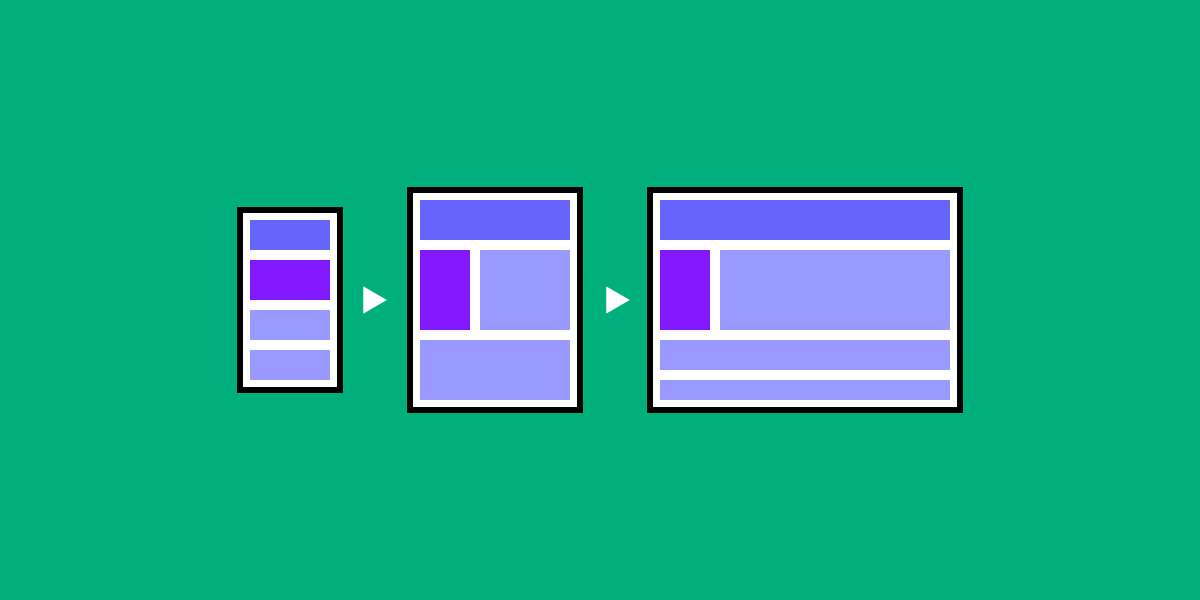
This area of skill and experience is also something that I have discovered from my own journey of being a generalist and also being passionate about UX design. As a generalist, I already had the experience of working on applications ranging from desktop apps to mobile apps. It took me many years before I finally realized what made me unique/different from other UX professionals. While most UX professionals were only familiar with designing good experiences for websites/web apps and/or mobile apps, I had something else that they may not have. I was able to design/engineer good UX on multiple platforms and to run on different Operating Systems. Everything from macOS to Windows, Android to iOS, and even the in-between.
Quite honestly, so far, I haven’t met/known many individuals that can also offer the same thing as I do. I’ve met a few over the years, but honestly, there are so few of us around, I honestly think we can have more.
Have Good-to-Strong Experience in Frontend Dev / Scripting Languages
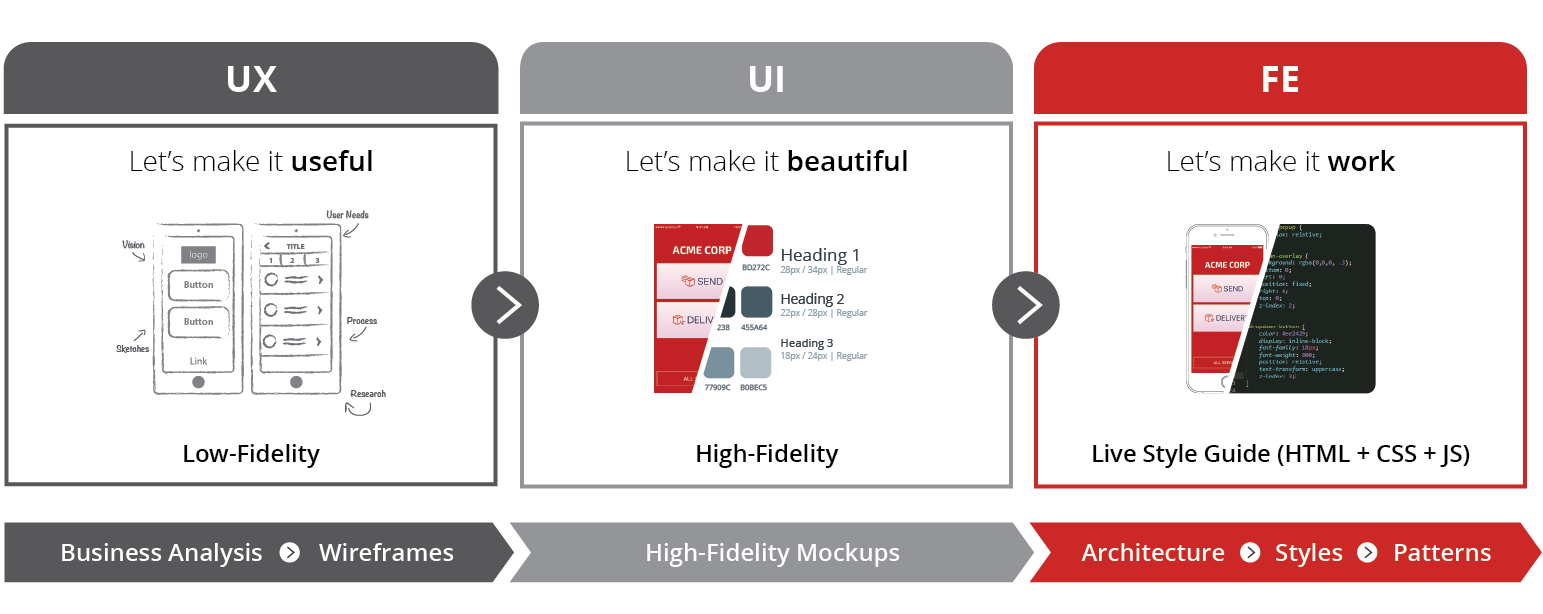
The above illustration is quite simplistic, but it helps to bring my point across. This particular area of skill might not exactly be an “official” part of the UX professional’s job description. But in the world we’re living in right now, based upon the growing demand for talent and the lack of it, more and more companies are looking to hire professionals that may have more than one area of skillsets.
A few years ago, standard UX professionals would be arguing that frontend development skills aren’t necessary for a UX professional. And yes, they might be right about it. In a traditional sense, UX doesn’t really involve the need to write any code. But times are changing, and as professionals in the industry, we need to change along with it or suffer the consequences of being left out/behind. I could imagine some of you might still debate that frontend development skills is a “nice-to-have” kinda skill for a UX professional. And you’re probably true. But like I just said, times are changing.
For the past two years, I have already seen more job descriptions showing that companies are hoping to hire someone that isn’t just good in UX, but also in UI design. And yes, in some cases, they list it below under the bonus skills/experience section, telling job applicants that if they have some frontend scripting experience, it would increase their chances of being hired.
But beyond what I have observed on multiple job descriptions, I’ve realized the added benefits of having a good/strong background in frontend development. When a UX Specialist understands the relationship between UX-UI and frontend coding, he/she will be able to better design an application that makes the transition between those workflow/processes more smooth.
I like to use the phrase “ding-dong” to describe the situation when a design has a flaw and when it’s handed over to the frontend developer, they would voice their discontent because a particular feature/functionality isn’t feasible (coding-wise). And then the ball goes back into the court of the UX designer and then the UI designer and so on. This back and forth between the UX/UI designer and the frontend developer takes time, which translates into money.
But when you’re good at all three skillsets, your designs naturally help the company/team to save both time and money.
Closing Thoughts
Even as I was working on this article entry, I was making notes of some skillsets that I felt could’ve made this list, but I wanted to keep it as concise as I can. When a list becomes too long, it’s harder for readers to remember all of the key points. It’s one of the reasons why I always prefer to use the “3-pointer”, or “5-pointer” rule.
Among all of the different skillsets and capabilities that a UX Specialist should have, I felt that those five that I’ve listed above seem to make the biggest difference between a standard UX professional versus a specialist. Well, at least according to the current trends. I will continue to monitor those trends, and when they start to shift (likely in a few years), I’ll update this list again. Until then, I’d say that this list is something you can rely on if your goal is to become a UX Specialist.
Leave a Reply