“I probably know a lot more than most in my fields, but that doesn’t necessarily mean I have all the answers.”
It has taken me years before I could finally embrace my recognition and title as a certified thought-leader. Eventhough I had already earned it, there were times when I simply felt like I didn’t deserve the title and recognition. It took a lot of self-reflection before I finally understood that the root cause was because of my low self-esteem growing up. When you are constantly surrounded by people or a system that tells you that you are not good enough, or that you would never measure up, it is easy to feel unworthy.
But as soon as I began to accept my recognition and title as a thought leader, the very first thing I did, was to remind myself of one thing, I know more than most folks that work in the same industry, but I don’t know everything. And just like you and everybody else, there’s still more that I can learn/master.
So when I made the decision recently to focus my efforts and energy on being an Agile and UX Specialist, I also started thinking more about the kinds of goals I want to set for myself. For as long as I can remember, I’ve always been a goal-oriented/mission-oriented person. So, here are a few pretty broad areas of UX design that I want to focus on and deepen my knowledge and understanding.
Core Goals
Human Behavioral Sciences
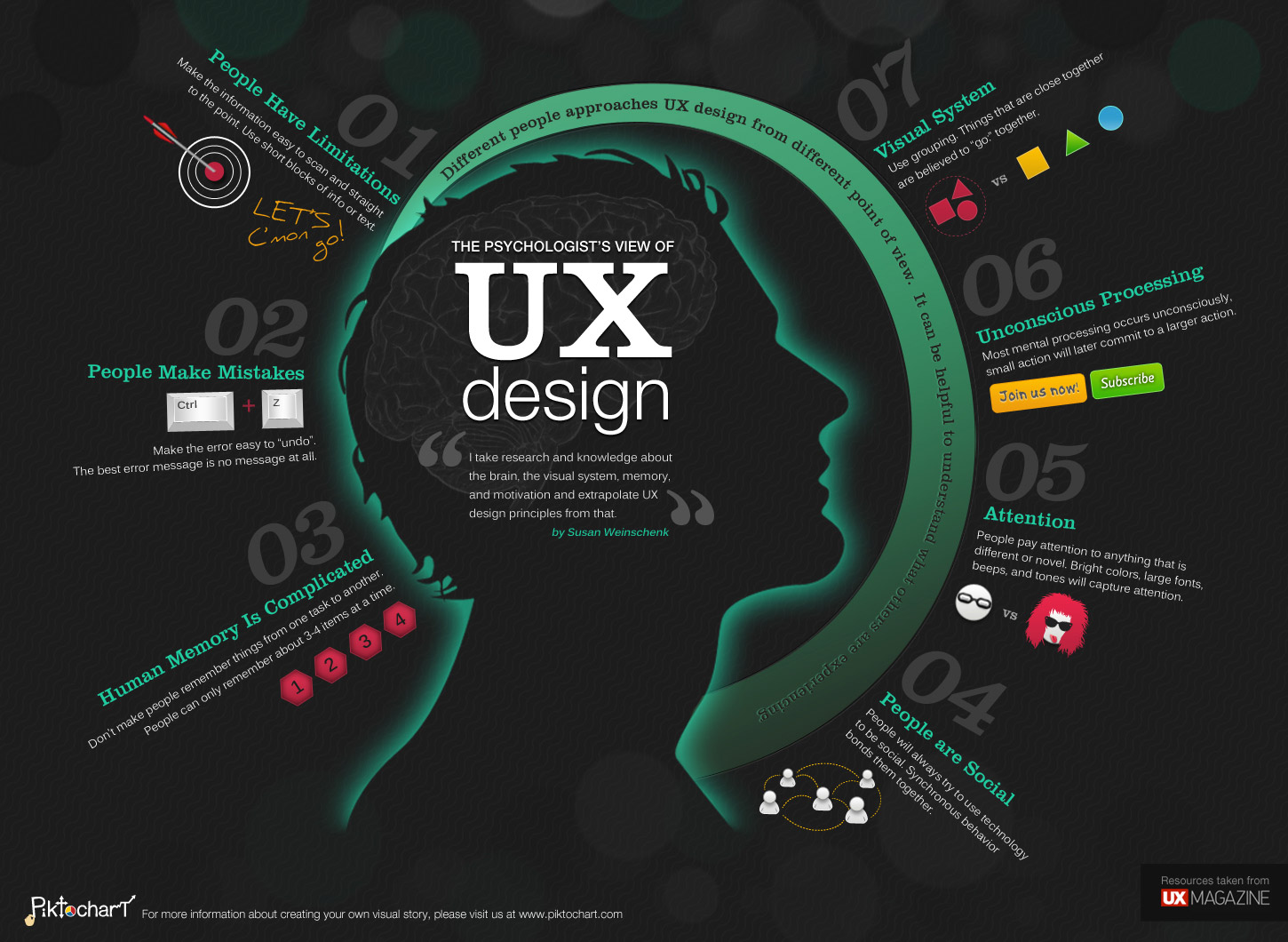
One really important area that falls under the umbrella of UX design is the understanding of human behavior – mainly, it is the studying of how people would behave around a particular piece of tech solution. You can say that it involves understanding human psychology, although I’d argue that that is not really necessary.
While it is true that there are actual degrees being offered for the field of “Human Behavioral Sciences”, I do want to highlight a really important point, you don’t necessarily need to have a degree in that field in order to become really good at UX design. It certainly adds a ring to your qualifications when you apply to a job if you have a degree like that though. But speaking from my own experiences as a thought leader, I can tell you that I didn’t have a degree in human behavioral sciences. And yet, I was regarded as a thought leader and expert in my field.
One reason that is true is because of my observational skills. Ever since I began pursuing my passion in UX design in 2006, I’ve already had a knack for making detailed observations about how users/people would react/behave around various software and hardware products. The more I observed (studied) how people would behave around those products, I started to notice these patterns in their behavior, and that was how I eventually started to see trends, and those trends would eventually lead to certain best practices and design patterns.
The best thing about this area of work is that human behavior is never static. I love going back to my example of the pandemic and how our collective behaviors and lifestyles have evolved and changed in just a matter of 2 short years. Many of those changes are here to stay, and so many companies now see the necessity to evolve their products and services so that they would be able to continue meeting the needs/demands of their customers. Companies that weren’t able to evolve/adapt quickly enough during the pandemic eventually went out of business.
Human Behavior is constantly changing. That is also the reason Customer Experience (CX) is another field businesses see such a high demand for talent right now. I have long believed that UX is just a subset of Customer Experience. CX is ultimately what drives our UX design. In the world of technology, a customer’s experience revolves around their journey (how they use and navigate a particular website/app). It is about monitoring their usage of your website/app, and then compiling that usage data into meaningful graphs and charts to help companies make decisions on which features they want to keep, remove, or enhance.
As a UX specialist, I aim to deepen my knowledge and understanding of human behavior around tech products and solutions. And to take things another step further, I want to combine that understanding with real-world practices and trends. I hope to publish more articles/videos on this area of UX.
Mastering UI Design Guidelines
Over the years, I have (among other UX professionals) constantly tried to educate others that there is a distinct difference between UI design and UX. I still stand by that. However, as a UX specialist, I also found that when a UX professional is armed with the necessary UI design skills, it enables them to have a much better understanding of the challenges that UI designers face. The UX professional will also have a better understanding of the kinds of tools that would be available to a typical UI designer.
But those I have just mentioned are just secondary. The real key reason for UX professionals to deepen their understanding of UI design is that they can keep those guidelines in mind when they are creating those high-fidelity wireframes. It is also an important step towards designing apps/websites that are not just functional but also to help make the lives of UI designers easier (after they have taken over the UX designs).
While I haven’t created any bad UX designs myself, I still believe that it is always possible for inexperienced UX designers to create designs that aren’t necessarily bad per se, but those designs might present features that make it harder to convert into the right UI design later on. During the early days of application design, that was precisely the case when UI/graphic designers would try to create these mock-ups, but after the customer signs off on the design, the developers realize that some parts of the mockup just wasn’t possible to implement. It looked great on paper, but it just wasn’t feasible in reality.
As a UX Specialist, one of the most important steps I want to take is to deepen my knowledge and understanding of those UI design guidelines. Some of the more well-known guidelines would include the Material UI and iOS Human Interface Design. I’ll also be diving into guidelines for other platforms like the web and desktop apps. And if there isn’t a set of guidelines for it, I will attempt to publish my own recommended guidelines. Personally, I don’t recall there ever being a set of UI design guidelines for desktop apps. But I could be wrong.
Frontend Development Skills
Now, on to another area of work that I am deeply passionate about as well. Because I started my career as a software developer and my passion for UX, it has influenced my decisions and pushed me towards becoming more of a frontend developer than a full-stacked developer.
For a really long time, I have tried to convince myself that I am a full-stacked developer (you know, being a jack of all trades). But that isn’t true about me. Between both frontend and backend development, I am actually much stronger as a frontend dev than I ever was as a backend developer.
So when it comes to being a UX specialist, I want to continue strengthening my skills as a frontend developer. If there is ever such a thing as a full-stacked UX Engineer, I think I’ll fit it like a glove. In my view, I believe a full-stacked UX Engineer is someone that isn’t just really good with UX design, but also someone who has a deep understanding of various UI design guidelines and also knows how to write code for frontend designs.
When it comes to frontend development, it would involve various skills including HTML5, CSS3, SASS, ReactJS, AngularJS, and even VueJS. While I like to claim that I am already quite familiar with many of those skills, I must admit that I am not quite a pro just yet. That is where this goal comes in – I want to become a pro in those skills. It could take a few months to a year for me to really get there, but I know I’ll get there.
Bonus Goals
Getting a New MacBook Pro Workstation
One of my personal and material goals as a UX Specialist is that I want to be able to invest in a MacBook Pro workstation. A big portion of my work as a UX Specialist will require being able to work within the macOS environment. And yes, there are better tools that are available to the macOS versus the Windows OS.
When I was still practicing UX as a consultant, I was using a MacBook Pro because it is just a better alternative to having a Windows laptop. Another reason why I want to own a high-end MacBook Pro is because of my content creation efforts. I could imagine that when I am mobile or working out of a cafe every now and then, I’ll still be able to use the MacBook Pro to carry out some of those tasks. I don’t have to make a special trip by rushing home just so that I can get on my more powerful PC.
Own a Collection of Mobile Devices
To be absolutely practical, I’m not thinking about owning an entire box of mobile devices. But instead, I am thinking about keeping a few key essential devices. Part of being a UX specialist (UX design, UI design and frontend dev), would involve being able to test certain designs on actual devices to see how they look on actual devices and not just within a software.
One thing my years of experience have taught me is this – you cannot assume that what you are seeing on your desktop during design or development stage will look and behavior the exact same way on a end-user’s device. So the best way to test out that potential end-user’s experience is to launch/test those designs on an actual device itself.
When I imagine what I would have in my collection of devices, I would imagine a set of mobile devices with different screen sizes (maybe one low-end smartphone, and 2 high-end devices) and tablets. I would do the same for both Android and iOS devices.
Nothing is Ever Set in Stone
At this time, honestly, I doubt there will be any significant changes to my goals. I have enough experience to know that this is exactly what I need to focus on for the foreseeable future. That said, I am also going to remain agile because I know that things can happen and change. While I believe there won’t be any major changes, I’ll remain agile. It is possible though that I might expand my list of goals in the near future.
But first, I’m going to start diving into those goals and break them down into smaller bite-sized goals.
Leave a Reply