

Hi everyone, it’s been a genuinely long time since the last time that we actually conducted an in-depth product/UX research study. The last time that we conducted something of a similar nature, it was back in 2015/16. We remembered publishing this rather lengthy research article that didn’t seem to pick up much traffic at first, but after 6 months, 9 months, a year of publishing it, the research article began to explode in readership and engagements. As it turns out, being an industry pioneer and a thought-leader meant that we have the ability to see and read the landscape up ahead before anybody else could. Now, a decade later, we are once again finding ourselves back in a similar position.
Being A Premier Domain Expert
Here’s something you ought to know about who we are beyond just our credentials as an industry pioneer, a thought-leader and a Global Top Voice in the UX industry: We are also a premier domain knowledge expert when it comes to the designing & engineering of content management systems (CMS) for the past two decades. Throughout our career, we have worked on countless “from the ground-up” as well as pre-existing CMS solutions.
We ARE the expert you would call upon when it comes to working on or designing a CMS.
After two decades of working with and on so many Content Management Systems, we have been observing and noticing a series of patterns:
Every single CMS-to-date has followed a very “reactive design” strategy when it comes to how they have been implemented and executed. Every single one, and we do mean every single one, follows a set of well-established pattern and best practice, but none of them were truly UX-First.
They were created during a time as a functional answer to a real-world problem. WordPress was already building a name for itself and was the first true CMS, but its live design UX was still seriously limiting for non-power users. See, WordPress was naturally created/designed for power users and was never truly intended as a friendly Website Builder.
That is when other options would eventually come along, like Squarespace, Wix and Webflow. Still, none of them were truly innovative or offered something different. They were, as we like to call it, “reactive.”
As a domain knowledge expert, we pride ourselves as someone who knows the landscape better than most people on the planet. But for us to continue holding on to that pride, we gotta honour it by continuing to do our due diligence. And that means taking the time to better understand each of those products and platforms. While we may have had prior working experiences with most of them (except Webflow), we’re not afraid to admit that we have a gap in our understanding when it comes to the past couple of years (we stepped away from the UX industry briefly).
Now that we are back fully, we will be spending the next 3 to 6 months to conduct an in-depth research study into each of these Website Builders to figure out what makes them tick, how they stack up against each other, as well as what the community really thinks about their own experiences when working with each of these platforms.
Let’s Define What “CMX” Is.
Content Management Systems (CMS) focus on the what – storing, organizing, and delivering content. They solve the technical problem: “Where does the content live?”
Content Management Experience (CMX) focuses on the how – the complete human experience of creating, managing, and publishing content. It asks a fundamentally different question: “What does it feel like to work with all different forms of content?”
This distinction matters because:
When we look ahead to the next two decades, the real question we should be asking ourselves isn’t “What” we want to continue building, or even the “How” of what we are building. The real question that would help to truly push Content Management Systems into the next generation is: “What would an Ideal Content Management Experience (CMX) look and feel like?”
CMX is a UX-first approach towards what Content Management should feel like rather than what features (AI or non-AI related) it should contain. CMX takes the focus away from the actual product or platform and turns the focus onto the human [user] side of it.
Goal of Our UX Research
Our research study will focus on three leading website builders: Squarespace, Wix, and Webflow. Each represents a different approach to content management, and together they paint a comprehensive picture of the current CMX landscape.
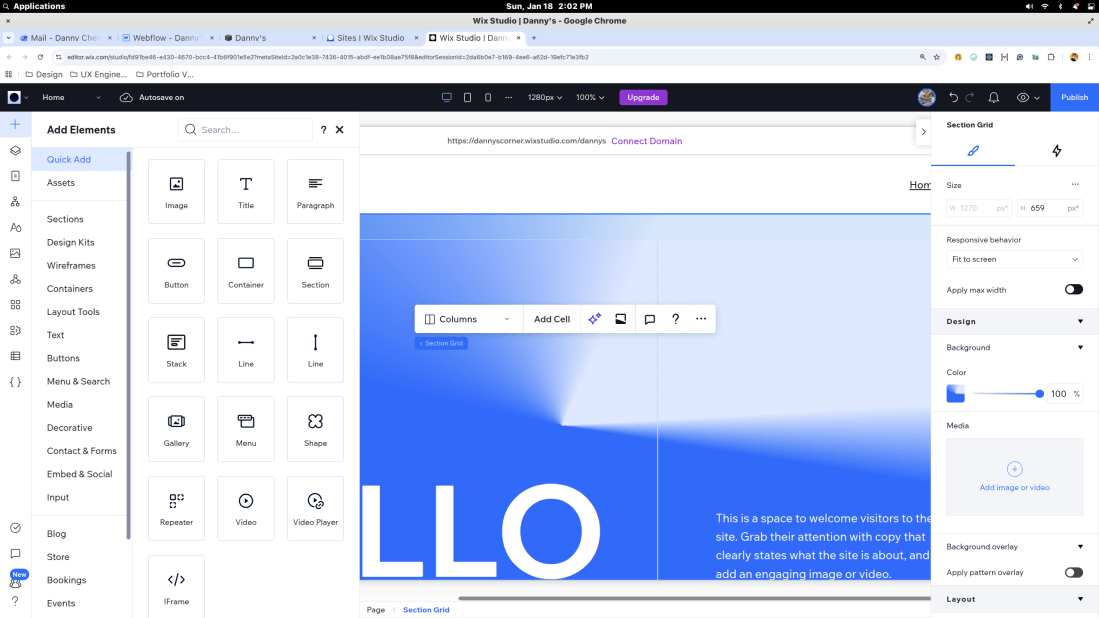
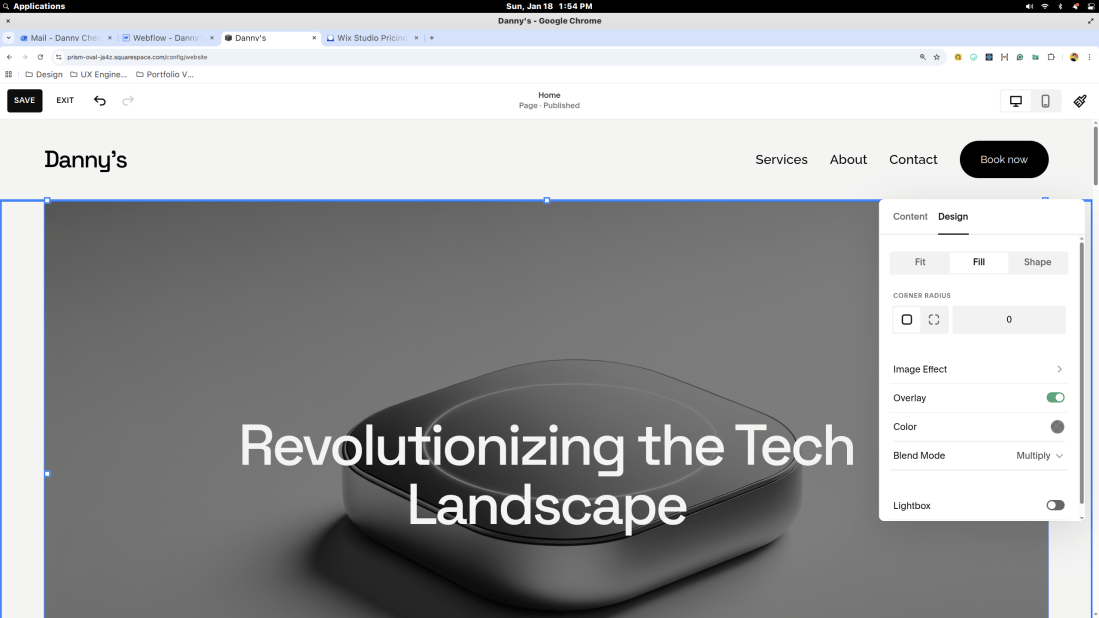
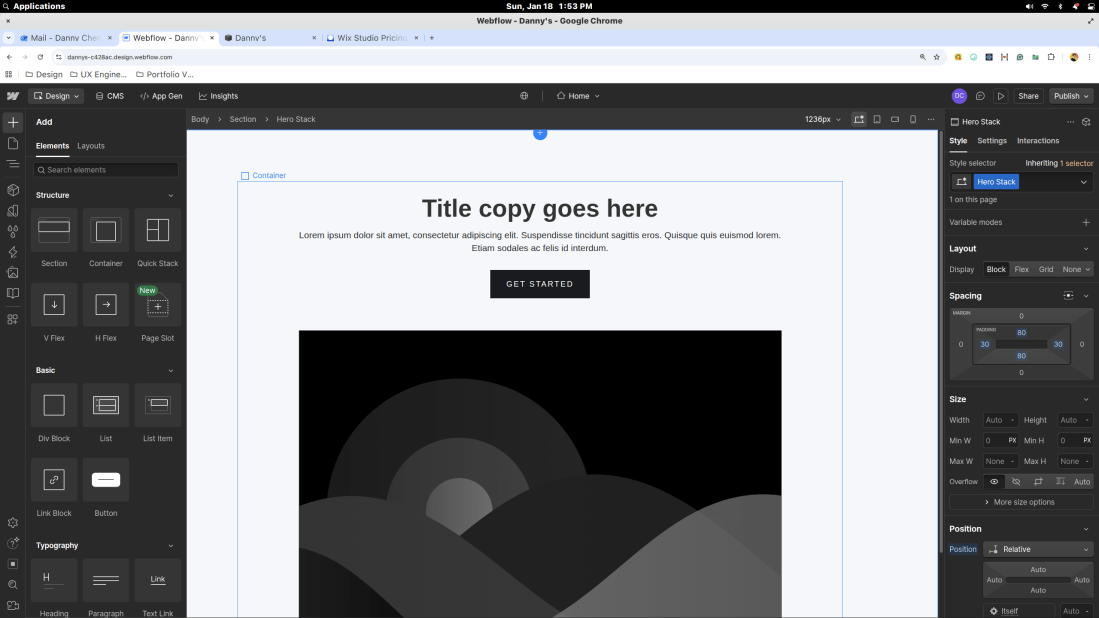
What we’re studying:
- The onboarding experience – How does each platform introduce users to content management? What assumptions do they make about user knowledge and capabilities?
- The content creation workflow – From blank canvas to published page, what does the actual work feel like? Where does friction exist? Where does flow exist?
- The design-to-content relationship – How do these platforms handle the tension between design flexibility and content structure? What trade-offs are users forced to make?
- The learning curve – How long does it take to go from novice to proficient? What patterns are intuitive versus what requires explanation?
- The ceiling and the floor – What can power users accomplish? What can beginners accomplish? Where do these platforms constrain or enable different user types?
What we’re looking for:
We’re not conducting a features comparison or a “which is best” ranking. We’re searching for patterns – both strengths to build upon and gaps that reveal opportunities for the next generation of CMX thinking.
At the end of this study, we’ll publish a comprehensive research article that answers: “What should an ideal Content Management Experience look and feel like?”
This research will inform not just our own future work, but contribute to the broader industry conversation around where content management is heading.
Closing Thoughts
There is without a doubt that Artificial Intelligence can, and will become a significant game-changer when it comes to the future direction of Content Management Experience (CMX). But rather than taking another “reactive” approach to incorporating AI into the traditional CMS solutions, maybe it is time for solution providers to start asking, “how can we redefine that experience into something that will allow us to truly stand apart from our competitors?”
But before we can answer that question, we got to first find out the current state of where we are within this domain. That’s where we will begin searching for our answers. What do you think the ideal CMX should look & feel like? Share your thoughts with us in the comments section below.
 Danny's
Leave a comment